Common AC Installation Mistakes That Reduce System Lifespan
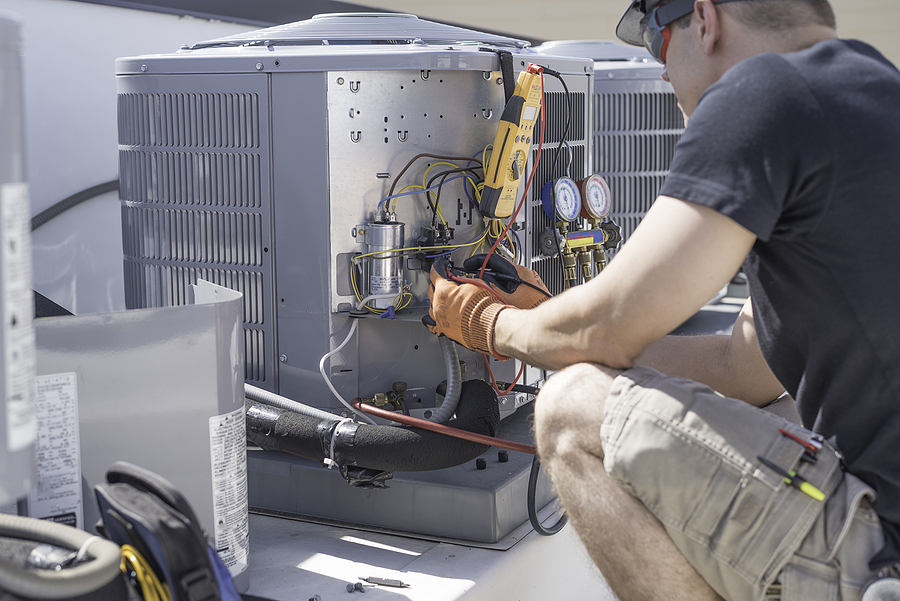
It’s one of Chicago’s hottest summer nights. You wake up dripping in sweat because the air conditioning you rely on to stay cool has failed. Not only are you tossing sweat-soaked sheets into the washer, but you’re also panicking because it’s the middle of the night. Imagine how hot your home will be when the sun is high.
You paid for your AC system’s installation about five years ago. A mid-summer breakdown is the last thing you expected. Equipment fails more often than you might think. Your system’s lifespan was shortened due to one of the most common AC installation mistakes.
Calculation Errors
When you hire an HVAC company to design and install your new or replacement AC system, you expect them to know the intricacies of their job. The truth is that an estimated 65% or more of systems are improperly installed. Some of the mistakes involve incorrect calculations.
Calculating the Square Footage Incorrectly
When you’re going through the square footage assessment, the technicians should measure the length and width of every room that will be cooled. The room’s square footage is calculated by multiplying the length by the width. Once the list of rooms is complete, the numbers are added to give the correct square footage.
If the technicians calculate your square footage by measuring the outside walls and the number of floors, it will cause a problem. You have closets, basements, attics, and garages that aren’t supposed to be counted. The wrong square footage leads to improper sizing.
Improper AC Unit Sizing
Air conditioning systems require correct sizing to work properly. If a system is too large for the space, it will cool the rooms fast and turn off just as quickly, leading to rapid on-off cycles, plus, humidity isn’t removed effectively. Both of which lead to excessive wear and tear on the compressor.
When it’s too small, it cycles on and runs continuously because it can never get the rooms cool enough. Constant operation burns out the motor faster than expected.
Undersized Circuit Breakers
Circuit breakers are automatic safety devices that prevent overloads or short circuits. If a fault is detected, the breaker trips, stopping the flow of current. This reduces the risk of electrical damage or fire.
A properly sized circuit breaker has an amperage rating that is higher than that of the AC system it powers. If the circuit breaker is set too low, it will keep tripping, and your AC system will keep shutting off.
Equipment Mistakes
Another area where we see problems involves the equipment itself, or a lack of it in some cases.
Bad Outdoor Unit Placement
The outdoor part of an air conditioning system (condenser) must be in a convenient location with adequate airflow. It can’t be hidden under a deck, in a shed, or up close to a wall. If a condenser can’t release heat properly, it can run at overly high pressures.
Lack of P-Trap
A P-trap brings condensation from the fans to the condensate drain line. If water sits in the system, internal AC components get wet and rust. Your home faces water damage, too.
Leaky or Poorly Insulated Ducts
If your AC system was replaced without a duct inspection, you’re losing cool air or hot, humid air in walls, basements, or crawlspaces. It makes your system work harder to cool your home. A new installation may have brand-new ducts, but it still needs quality insulation to ensure the cool air goes into your rooms, not into the walls.
Reusing Old Refrigerant Lines or Evaporator Coil
Sometimes, installers cut corners and leave old evaporator coils or refrigerant lines. It may shorten the installation time, but it creates a mismatched set that hurts efficiency and strains the compressor.
Older refrigerant lines contain coolants that are no longer available due to environmental laws and bans. If those coolants are mixed, it’s a major problem. Using older refrigerant lines is only acceptable if they’re carefully flushed.
Small Return Air Grilles
For your rooms to cool properly, the system needs to deliver cool air and draw (return) the air that’s warming up. When return vents are too small, the blower must work harder to overcome high static pressure. That puts extra strain on the motor.
Installation Errors
The equipment is there, and the sizing is perfect. There are still things that can go wrong with the installation.
Air and Moisture Remain in Lines After Installation
During an HVAC installation, air and moisture must be removed from all lines. A vacuum pump is used to remove air and moisture from the lines. If that doesn’t happen, the air and moisture, when mixed with oil, become acidic, causing deterioration of internal components.
Failure to Consider Panel Access
When it’s time for annual maintenance, technicians need to access the panels. If an AC unit is installed too close to a wall, making access difficult, essential parts of the maintenance routine are bypassed. This leads to neglect, which will shorten your AC system’s lifespan.
Improperly Leveled Unit
When an AC system is installed, it must be leveled. If it’s not, the oil within the compressor sits at an angle, which affects proper lubrication while the equipment runs. The condensate pan may not drain properly, which can lead to water that can grow mold or algae or create humidity that causes components to rust.
Loose Wires
Loose wiring can cause inconsistent power to the AC system. You might hear the system buzzing, and intermittent operation, tripped breakers, and a fire risk are all possible.
Missing Rubber Isolation Pads
An AC unit needs anti-vibration pads to keep copper lines from cracking. If there is a small crack in the copper lines, coolant leaks out, reducing system efficiency and creating a hazardous chemical spill.
Novice Welding Work
Welding (brazing) pipes is part of an AC installation. If nitrogen doesn’t flow through the pipes during welding (a process called purging), carbon and scale can form inside the pipes, clogging the compressor or expansion valve.
Poor Refrigerant Charging
The AC system requires proper charging to ensure the coolant flows properly through the compressor and lines. When it’s overcharged, refrigerant may reach the compressor while still liquid, leading to compressor failure. If it’s undercharged, the coolant may cause the coil to freeze, leading to the compressor overheating.
Problematic Thermostat Location
Thermostats should be placed where there are no drafts or constant exposure to sunlight. It’s also not ideal to place them near TV wall mounts or appliances that heat up, such as an oven.
Skipping a Test-Out
Once the AC system is installed, a test-out must take place before the AC installation team leaves. A test-out includes an airflow measurement, the temperature difference between the intake and output air, and the amperage draw.
Undersized Lines
The refrigerant lines in an AC unit must meet the manufacturer’s requirements. When they’re too small and narrow, coolant cannot flow fast enough. If they’re too large, oil doesn’t return to the compressor correctly, leading to seized components.
Hire a Certified HVAC Installer and Factory Authorized Dealer
Make sure the HVAC installer you hire is licensed and insured. Ask about the warranty coverage they provide. Ideally, choose a factory authorized dealer for the equipment you’re having installed.
Factory authorized dealers complete training programs specific to the makes and models they install. It ensures they know the ins and outs of the systems and how to install and maintain them correctly.
Air Blue is a Carrier factory authorized dealer. We have more than three decades of HVAC experience and are NATE-certified technicians. We’re an award-winning AC installation, maintenance, and repair company that stands behind every install.