How Adjusting Your Thermostat While at Work Actually Lowers Your Chicago Electric Bill
The variety of homes and rentals in Chicago comes with unique challenges for heating and cooling. From the high-rise condos in the Loop to brick bungalows in Portage Park, managing your home energy costs is both important and difficult thanks to the extreme weather conditions like summer’s trapped heat and humidity and winter’s frigid temperatures and snowfall.
ComEd’s electricity rates are generally lower in the winter, but the prices are best between the hours of 9 p.m. and 5 a.m. It’s the time of day when people cool their homes for an optimal night’s sleep. It’s not that easy in the summer. People run AC 24/7 to stay cool. That drives up electricity usage and costs.
One of the best ways to lower your monthly electricity bill is by adjusting your thermostat when you’re at work. Just a change of a few degrees can make a big difference.
We’ve heard homeowners say they were told their HVAC system uses more energy to fix the temperature difference when they adjust the thermostat. Air Blue Heating and Cooling is here to explain the realities of lowering your thermostat when you’re at work.
Understanding the Physics of the Thermostat and HVAC System
Many homeowners have been told that turning down the thermostat a few degrees is pointless. The idea is that it makes the HVAC system work harder when it goes to heat or cool the room after you return home. That’s not necessarily the case.
The amount you save when the system isn’t running as much makes up for the energy used to reheat or cool your home. You’re controlling when your system runs, which becomes the bigger benefit. If your AC runs less during peak hours and more at off-peak hours, you save money.
You’ve heard that hot air rises. Hot air naturally moves to cooler areas. How fast this thermal transfer is depends on the temperature outside and how different it is from the outside. Heat transfer rates work like this:
- Summer: Your thermostat is set at 72°F, but it’s 92° F outside. Your HVAC system must work hard to maintain that 20°F difference because hot air enters any space it can find to fill the cooler areas. If you move the thermostat to 80°F while you’re at work, it’s not working as hard to maintain a 12°F difference, so there are fewer cycles during the hours you’re at work.
- Winter: The opposite is true in the winter. The warm air inside your home escapes to the cooler air outside. If it’s 20°F outside and 70°F inside your home, heat keeps escaping, forcing your HVAC system to cycle frequently. Dropping the thermostat 60°F while you’re at work drastically slows that heat loss.
CBS interviewed the executive director of the National Energy Assistance Directors Association. He said that for each degree over 72°F, your cooling system’s electricity bill decreases by 3%. The same is true in the winter.
Chicago’s Climate and the Impacts on Rates, Humidity, and Extreme Weather
The 3% decrease is especially significant due to Chicago’s climate. In the summer, you have high peak electric rates. Hot air and moisture coming off Lake Michigan make summer’s hot weather especially uncomfortable with a heavy dew point.
Plus, all the pavement and concrete create an urban heat island effect by absorbing the sun all day. At night, the hard surfaces are still hot from the sun. They release heat long after the sun sets, which keeps the temperatures from decreasing. AC systems work hard at all hours to cool homes down, which increases electricity consumption.
In the summer, guidelines are to set your thermostat 7 to 10°F higher than your usual setting when you’re at work. Ideally, people are advised to keep their indoor temperature to 78°F, though many HVAC experts feel 76°F is also acceptable.
As winter hits, electricity rates are often lower as demand decreases. Some homes switch to gas heating instead of electricity. When you go to work, the same 7 to 10°F thermostat change is recommended.
Save Money in Just a Few Hours
Summer’s peak hours for electricity are 1 p.m. to 7 p.m. Turning up your temperature during those specific hours is enough to help you lower your electricity bills. In the winter, you could choose to lower the thermostat while you’re sleeping or when you’re at work. Both options save money.
Manage Humidity in Older Chicago Homes
When humidity soars, air conditioners both cool and remove excess humidity from your home. While you’re tempted to increase the temperature in your home to save money, don’t ignore the risk. If you set the temperature too high, humidity builds. Mold and mildew are risks.
You have to figure out where the optimal high temperature setting is. Watch the humidity levels in your home. If it goes over 60%, turn down the temperature. You could run a dehumidifier, but that’s going to use more electricity, which is why it’s best to adjust the temperature.
Protect Against Winter Freeze
A cooler home is easy to handle if you add an extra layer or cover your legs with a blanket. Going too low is risky, however, so never set the thermostat at less than 55°F. Windchills hitting exterior walls put your pipes at risk of freezing, so you need heat warming the walls.
What Can You Save?
The amount you save by moving the thermostat when you work depends on the insulation quality, square footage, and current electricity rates. Using the 3% rule, this is an example of what a person could save. If you usually pay $200 a month, a 3% (one degree) savings is $6. Drop or increase the temperature by 10 degrees, and you’ve saved $60 in just one month.
Electricity bills aren’t the only benefit to changing the thermostat. When your system runs less, you reduce wear and tear on your HVAC equipment. With proper maintenance, you could extend the life of your HVAC system by a few years.
Best Practices for Chicago Homeowners
A few additional changes to your home help maximize savings.
Adjust Ceiling Fans
The purpose of fans is to blow air on your skin, creating a wind-chill effect. They also help circulate the air. Make sure that ceiling fans are set in the correct direction.
- When AC Runs: Make sure the ceiling fans are set in a counterclockwise direction to create a downdraft.
- When Heat Runs: Make sure the ceiling fans are set in a clockwise direction to push warm air down.
Install a Smart Thermostat
If you have an older manual thermostat, you have to remember to turn it up or down before leaving for work. It’s easy to forget.
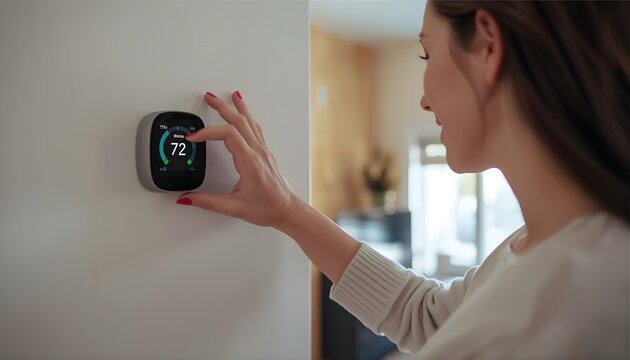
Upgrade to a smart thermostat and let the system handle it. You can set the settings in the app or turn on geofencing technology to know when you’ve left and when you’re coming back. Have your home cooling down or heating back up before you even get home.
ComEd and other utilities often provide instant rebates to help you purchase a smart thermostat at a substantial discount.
Weatherproof Your Home
Lowering or raising the thermostat is one way to keep your electricity bills down. Older Chicago homes are known to be drafty and poorly insulated. When there are gaps around basement sills and double-hung windows and poor attic insulation allowing hot or cool air to escape through the roof, your energy bills soar.
Consider adding weatherstripping. Caulk any outdoor gaps and cracks around windows and doors. Even insulating film applied over older windows and patio doors helps a lot. If you can afford insulation, it’s worth the cost. ComEd offers instant discounts on some weatherization products.
Schedule a Comprehensive Cleaning and Inspection
Air Blue Heating and Cooling also maintains, repairs, and installs Chicago HVAC systems. If you haven’t had yours cleaned and inspected recently, it can waste energy. Improve efficiency by having a licensed, certified HVAC technician check it out and make sure it’s running optimally. Schedule an appointment online.