How Pollutants Affect HVAC Systems in Commercial Warehouses
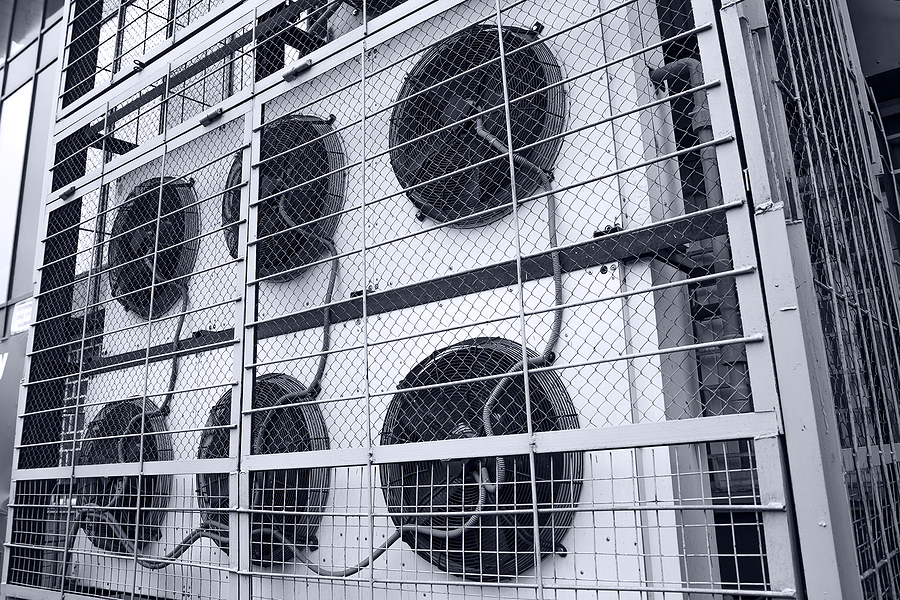
You cannot control the pollution caused by trucks and other modes of transportation traveling on Chicago’s roads. There’s a problem you may not consider. In a commercial HVAC system, outdoor air enters your building. Fine particulate matter from exhaust fumes, road salt, and other industrial sources is drawn into your warehouse.
Particulate matter clings to your equipment, especially in summer’s humidity. Deicing materials, such as rock salt, are corrosive. This corrosion damages your HVAC system faster than you might expect. Learn about the most common commercial pollutants and how they damage your HVAC equipment.
Chicago’s Warehouses Are Pollution Nightmares
The infrastructure in and around Chicago shapes the city’s booming warehouse market. With I-294 and I-355 connecting to six major interstate highways, it’s not surprising that Chicago became the nation’s leading logistics hub as the pandemic eased. E-commerce proved it’s here to stay.
During the pandemic, delays led to supply chain problems. Consumers were frustrated, as we, government officials and manufacturers, waited for their items to reach stores or for raw materials to arrive at their plants. Commercial warehouses in Chicago make sense given the area’s infrastructure and proximity to both the East and West coasts.
Despite the benefits of Chicago’s warehouse boom, there is a major downside. Air pollution increased as the number of trucks going to and from warehouses soared. In 2025, Cook County received an F on the American Lung Association’s “State of the Air” report. Among other findings regarding Cook County, there were:
58 days with orange or red ozone warnings.
8 days with orange, red, or purple warnings for particle pollution
Chicago ranked 13th for annual particle pollution, 15th for high ozone days, and 53rd for 24-hour particle pollution. Much of this is tied to warehouses and the trucks, trains, and planes bringing supplies and merchandise to and from them. Protecting air inside and outside your warehouse is important for the environment, your workers’ health, and to avoid fines for pollution.
Chicago Regulations Aim to Improve the Air Quality
Warehouses account for a small share of daily emissions that contribute to pollution. In the U.S., about a quarter of the nation’s freight trains travel through Chicago. An estimated 30,000+ trucks travel through Chicago’s metropolitan area every day. Each boat, plane, train, and truck entering and leaving the city and traveling to and from the area’s warehouses emits diesel and gas fumes.
Given the significant pollution, warehouse owners must do their part to reduce the emissions they send into the air. Chicago set rules regarding air filtration that business owners must abide by.
Chicago businesses need Air Pollution Control (APC) permits to operate. If your warehouse is connected to chemical, commercial, industrial, or manufacturing operations, an APC permit is required. With that permit comes the requirement to have pollution control devices. Rooftop HVAC units, boilers, furnaces, and unit heaters also require APC permits.
Commercial Pollutants That Impact Commercial HVAC Systems and Air Quality
Biological Contaminants
Carbon Monoxide
Concrete and Pallet Dust
Mold
Nitrogen Dioxide
Ozone
Particulate Matter (PM)
Radon
Sulfur Dioxide
Volatile Organic Compounds (VOCs)
The pollutants in your warehouse impact people, but they also damage your HVAC system over time.
Corrosion
In the winter, Chicago’s roads need salt to melt ice and prevent major pileups. This road salt breaks down into a fine powder as it’s ground between tires and asphalt. When trucks or windy days bring in salt dust, it’s drawn into your HVAC system.
Road salt is corrosive. Once it’s in your ducts, it reaches the control boards, causing significant damage. It coats your copper tubing, creating pitting. It also corrodes the aluminum fins on your HVAC system.
Dirty Coils
Evaporator and condenser coils are key to heat exchange, but if they’re coated in soot and dust, heat transfer is ineffective. Your system keeps running to warm or cool the warehouse, but the insulation created by that dust and soot prevents your commercial HVAC from doing its job.
With just a layer of grime about as thick as a dime, your HVAC system can lose up to 21% of its efficiency. A commercial rooftop unit can lose thousands of dollars in a heating or cooling season simply because the coils haven’t been cleaned. It works harder, which wears out parts like motors faster than expected.
Strained Motors
We touched on an overworked system that is wearing out faster. When you have extra concrete or pallet dust, particulate matter, and other pollutants in the air, your system draws the air through an air filter. When that filter becomes clogged with pollutants, the blower motor continues to try to keep the air moving.
As the blower motor works overtime, static pressure increases, forcing the motor to work harder, heat up, and potentially fail. It also forces belts to turn repeatedly without breaks, stretching them and causing slipped or broken belts.
The Toll of Poor Air Quality on Your Workers
Your HVAC system is certainly important to you, but you wouldn’t have a business without hardworking employees. Poor air quality will impact productivity. The air in your building doesn’t circulate effectively, so pollutants and germs make your workers sick.
You lose money when your workers are sick and keep taking days off. If they continue to work despite their reduced concentration and focus, they may cause accidents with pallet jacks or forklifts. Your workers may make constant errors when picking orders. It also gets costly if OSHA fines you for failing to provide a safe working environment or if your insurance provider raises premiums.
Proactive Maintenance Protects Your Warehouse
What can you do to ensure optimal air quality in your warehouse? Start by making sure a commercial HVAC technician cleans and inspects your system each season. Proactive maintenance is best. Schedule a commercial HVAC cleaning appointment before winter’s heating season and before summer’s heat and humidity arrive.
Professional maintenance identifies leaks that can produce dangerous levels of carbon monoxide in your building. It’s a risk you face when your HVAC system uses natural gas or propane.
Ask your technician whether your system can handle MERV-13 or better. A higher filter grade captures more particles. Make sure you change your filters regularly, in a relatively dirty warehouse with many pollutants, monthly changes are best.
Have your ducts inspected. If there is a lot of mold, duct cleaning can remove it. Researching the cause of the mold is a helpful second step to prevent it from growing back.
Is it time for a new commercial HVAC system? Ensure the air intakes are in low-traffic areas of the warehouse. You don’t want them near the loading docks. Ask about add-ons, such as UV lighting, to help reduce bacteria and viruses.
Predictive maintenance is important, but you also need to have your air quality assessed. If problems are detected, improvements shouldn’t be pushed aside. Have experts in air quality help find cost-effective solutions.
Save Money With Clean Air
HVAC systems do more than keep your warehouse cool in the summer and warm in the winter. They also keep the air clean, protecting your workers and visitors.
With pollutants from road salt, diesel engines, chemical spills, industrial dust, and possibly fumes from any manufacturing equipment in buildings adjacent to your warehouse, your company loses money. Your profits go toward more frequent repairs, costly workers’ compensation benefits, and reduced productivity.
Plan for 2026 to ensure your HVAC system delivers the superior filtration your employees and customers deserve. The air quality specialists at Air Blue know what works in Chicago’s changing climate and advise you on the best HVAC systems to eliminate the most common commercial pollutants in Illinois.