How to Properly Shut Down Your AC for the Winter
Summer is trying to hold on, but despite the October burst of 80-degree weather, winter is coming. Before you know it, you’ll switch from AC to heat and wait for the first flakes of snow to blanket the lawn.
In Chicago, winterization is more than another to-do list. It’s a critical step that protects you and your home from blustery Lake Michigan winds and sub-zero temperatures. Taking a few steps now helps keep your home’s heating and cooling system from costly repairs.
When you’re shutting down AC for the season, it’s not as simple as changing the temperature. You need to take a few steps to shut down your central air conditioning system for winter properly.
Steps to Take When Shutting AC Down
Shutting down your AC for the winter can be a DIY project, but check your warranty coverage first. Sometimes, it’s better to have a professional HVAC technician do the work to protect your system’s warranty. The steps can be challenging for some, but it does come down to your comfort level with hands-on maintenance tasks.
Turn Off Power
You must shut down the power to your central AC system. You don’t want your AC accidentally turning on during a warmer winter day.
This entails opening an electrical box and flipping a breaker that’s labeled AC. Look for the electrical box near your outdoor condenser. Sometimes it’s a lever, but it could also be an AC switch you pull out and flip down, or a fuse.
Confirm the system is off by turning down your thermostat while someone watches the outdoor unit to make sure it doesn’t turn on. It should be off, as long as you found the correct power box.
Clean the Outdoor Condenser
Once the power is off, check the outdoor condenser for any fallen leaves, remaining cottonwood fluff, pollen, and dirt. Spray it off with a garden hose, and make sure you remove as much as possible from the coils.
Remove any tall grass or weeds, sticks and branches, and leaves from the base pan. Cleaning with the hose on a sunny, breezy day helps dry things before you add a recommended cover.
Inspect for Existing Damage
Look at the casing, coils, and fins for any obvious signs of damage. A rock or stick accidentally thrown by a mower can cause issues. If you notice damage, have it addressed before your AC is needed next spring.
Check the Condensate Drain Line
Make sure the condensate drain line is completely empty. If water remains, it could freeze as temperatures drop and cause damage.
Protect Exposed Pipes
Install foam insulation sleeves over any exposed copper pipes. This helps keep them from freezing and potential wear.
Change Your Thermostat to Heating Mode
Head inside to the thermostat. Make sure you slide the switch to heat rather than cooling or fan only. If you have a digital thermostat, use the buttons or touchscreen to select the heat mode.
Replace the Air Filter
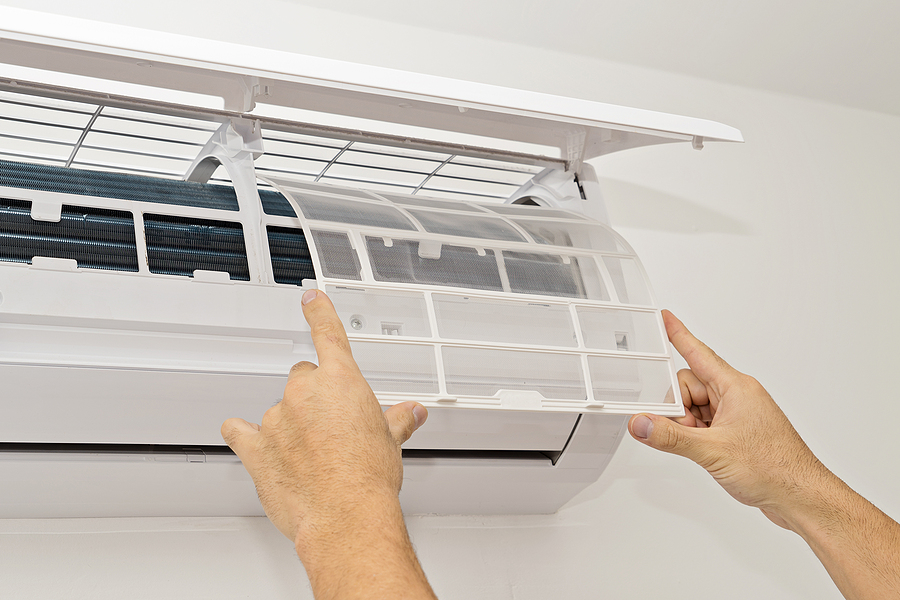
Check your air filter, and replace it if it’s due. If you see visible dirt and grime, start winter with optimal airflow.
Winterization Tips for Chicagoland Homeowners
Once your AC unit is shut down for the winter, there are a few things you should do throughout the winter to protect your outdoor components from costly damage that has to be fixed before your system runs again.
Keep Snow Cleared
As snow piles up, the weight of wet snow and packed ice can lead to damage. Keep a two-foot path cleared around your outdoor unit. Try to keep snow from piling up on top of it.
Cover the Unit Correctly
Imagine the damage that a large icicle would cause if it fell from your roof to the unit several feet below. A cover is important.
Never tightly wrap your outdoor condenser in a tarp or heavy-duty plastic. Many discount store-bought AC covers are also too snug. If you do use an AC cover, make sure it is a breathable mesh or only covers the top. We prefer plywood, however.
Wrapping it tightly traps moisture, which can lead to rust. It also provides a warm, dry climate for chipmunks, mice, and squirrels. They can cause tremendous damage to wiring if given the opportunity.
Instead, place a sheet of pressure-treated plywood over the top. That prevents damage from heavy snow or falling branches. It also makes it easier to clear snow after a storm. Have someone help you lift it and flip it over to dump the snow.
Are There Ever Situations Where Keeping Your Central AC Running Makes Sense?
Not in Chicago. Central AC needs to be shut down and prepared for the long winter ahead.
Running an air conditioner when outdoor temperatures are below 60°F can damage the condenser by letting the evaporator coil get too cold and form ice, or fail to fully evaporate back into a gas, creating a situation known as slugging that can damage the valves.
If your home’s cooling system uses a heat pump to warm or cool the air using heat energy from outside or inside your home. It’s a little different. Heat pumps are designed to run during the winter, too. If you have it set to auto, it will switch to heat when needed, or you may need to use your phone or thermostat to change it from cool to heat.
A dual-fuel system will switch automatically to the heating system when the temperature drops below a specific temperature. You may not need to do anything to prepare this system for the winter weather. Just make sure your heating system is cleaned yearly and that you change air filters as often as recommended.
Schedule an AC Cleaning During the Winter
Now is a great time to schedule your AC cleaning. When summer arrives, Chicago HVAC companies are overloaded with emergency service calls. If you have your AC system cleaned and inspected in the off-season, you won’t struggle to find an opening if repairs are needed.
When you turn your AC back on next spring, make sure you know what to do. Ask your AC technician whether you have a crankcase heater. If you do, once the heat is off in the spring, give your system a full day before you start running the AC.
Air Blue Heating and Cooling keeps our customers comfortable all year. Even when it’s time to switch to heat, don’t ignore your AC. If you’re not comfortable handling AC winterization tasks, give us a call. We’ll have a technician get your system ready for the winter.