Surviving Chicago’s July Humidity: Why a Short-Cycling Air Conditioner Leaves Your Home Feeling Sticky
In Chicago, July’s long days aren’t just hot. They’re also incredibly sticky. You walk outside and feel like you’ve stepped into a steam shower. As thermal winds blow across Lake Michigan and are heated by the intense sun, the city fills with hot, moist air.
When it’s 90 out, it’s not so much the temperature as the humidity that makes you feel miserable. It makes you never want to leave your home.
Air conditioning is key to feeling comfortable. Yet some find that, even though it’s 75 inside, everything still feels damp. Why isn’t the air conditioner taking care of the humidity, too?
Short-cycling is often to blame when a home feels cool and humid at the same time. The air conditioner turns on, runs for a few minutes, and shuts off again. Air conditioners are supposed to both cool the air and remove excess moisture, but the wrong system can cause big problems with in-home humidity levels.
How a Modern AC System Works
Do you know how an air conditioner works? People often think the machine creates cold air and blows it out of the system using fans. It’s not that simple.
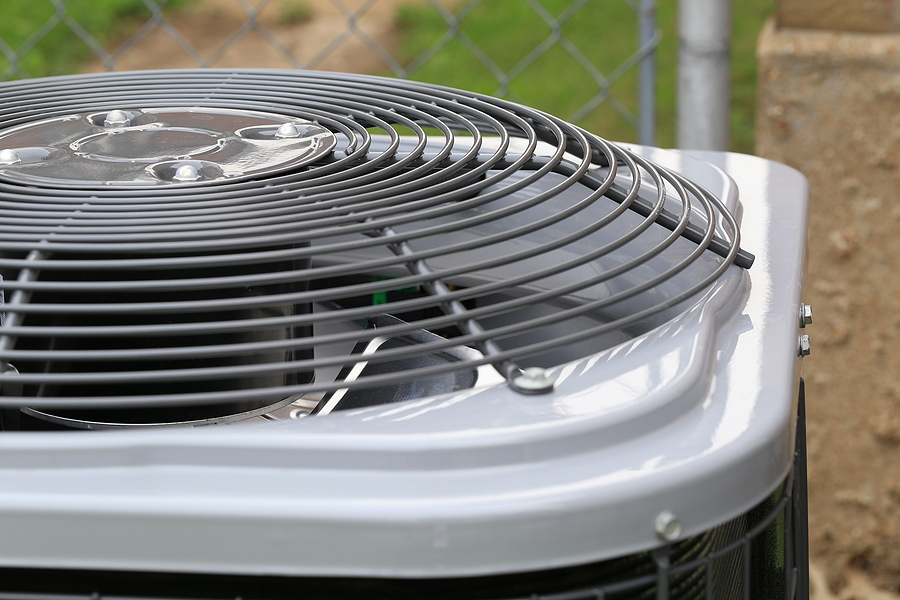
An AC works through two main systems: the compressor and condenser. The compressor is the portion inside your home, while the condenser sits outside. They’re connected by copper tubing. That tubing contains coolant.
Coolant is compressed (pressurized), turning it from a liquid to a gas. There’s also an evaporator that cools the air that passes over it, collecting condensation (moisture) on the coils. The air cools as it passes over the evaporator and enters ducts that carry it to different rooms in the house.
As fans push cool air around the home, warm air returns to the compressor. Coolant travels outside, where the condenser draws heat from the coolant, converting it back into a liquid. This cool liquid returns to the compressor, where pressurization and evaporation produce more cool air.
With each loop, the moisture on the evaporator collects and falls into a pan that’s connected to a condensate line. The moisture goes into that tube and out of your house.
This process takes time. It doesn’t remove humidity instantly. To effectively reduce humidity in your home, the system needs to run continuously for several hours to achieve a humidity level below 50%.
Why Is Your System Short-Cycling?
Short-cycling isn’t a normal occurrence. It indicates that there’s a problem with your HVAC system. In a Chicagoland home, short-cycling usually occurs for one of the following reasons.
Frozen Evaporator Coils
If your evaporator coils are covered in ice, your system cannot work. That ice prevents your system from absorbing heat from your home. The AC system detects the issue and shuts down. When the ice melts, it starts back up, but once the ice reforms, it has to shut down again.
Blame evaporator coil icing on one of these issues.
- Blocked supply registers
- Clogged and dirty air filters
- Damaged return ducts
- Oversized HVAC Equipment
One of the biggest myths we hear is that “bigger is better.” People believe that purchasing an air conditioner that’s too large for the square footage will save money. They think because it’s capable of a bigger space, it will run less often while cooling just as well.
If you have an AC system that is too big for your home, it’s creating short-cycling. It does cool your home quickly, but it’s also shutting off quickly. Your home is cool, but it hasn’t had time to remove humidity.
Poor Thermostat Placement
Your central AC system may be working perfectly, but there’s a problem. Your thermostat was installed under a supply vent. The cold air blows over the thermostat, so it sends a signal to shut off the system before your home is fully cooled.
Refrigerant Leaks
Your cooling cycle relies on coolant. A small puncture or a leaking joint can cause leaks and low refrigerant levels.
This causes a drop in system pressure, triggering the system to shut down. Once the pressure stabilizes, the system starts up again, only to shut down as soon as pressure drops.
The Costs of a Short-Cycling AC and How to Fix It
Feeling sticky at home is bad enough, but there are additional costs associated with a short-cycling central AC system.
Energy Bills: Your AC’s motor is turning on and off frequently, drawing power each time it cycles on. If it’s starting up half a dozen times per hour, you’re using far more electricity than you’d use if your system turned on and stayed running for that hour.
Mold and Mildew: A humid house is more likely to develop mold and mildew issues. Dust mites thrive in moisture. Not only do they impact your health and worsen allergies, but they also can lead to warped trim and drywall.
Wear and Tear: The more your motor turns on and off, the more strain it experiences. It’s going to wear out faster than expected, leading to a costly motor replacement. Actual costs depend on your system’s size and manufacturer, but the average cost in the U.S. is $500.
Fixing a short-cycling air conditioner is important for your health and your wallet. Air Blue Heating and Cooling has a few things to try before calling in an HVAC expert.
Check the Air Filter
Turn off your HVAC system and remove the air filter. If it is coated in a blanket of dust, hair, and pet dander, replace it. A dirty filter restricts airflow, leading to a frozen coil and short-cycling.
Inspect Your Registers and Vents
Go through each room and make sure at least 80% of your supply vents and return grilles are open and not blocked by drapes, furniture, rugs, or toys.
Look at the Outdoor Condenser Unit
Examine the area around your outdoor condenser. Make sure cottonwood’s fluffy seeds, mowed grass, or weeds aren’t blocking the exterior fins. If it looks dirty or covered in sticky pollen, use a garden hose to rinse pollen away.\
Call a Licensed Chicago HVAC Professional
You’ve checked the common causes, but your system is still short-cycling. It’s time to call in an HVAC technician. Air Blue’s HVAC technicians:
- Check for coolant leaks and make repairs.
- Perform a Manual J load calculation to see if your system is oversized.
- Test all safety switches.
- Verify thermostat wiring.
If our AC professional confirms your system is oversized, you don’t necessarily have to buy a brand-new AC. Our technician may recommend an indoor blower fan speed to extend runtimes or suggest adding a whole-home dehumidifier to your existing ductwork to handle the moisture load your oversized AC misses.
Chicago’s summer weather is beautiful, but the humidity is a downside. When your air conditioner performs correctly and removes both moisture and hot air, you no longer have to worry about short-cycling. Give us a call, and we can help you pinpoint the problem.